Leading in Crisis
Accept Mistakes and Learn from them
My experience of leadership started early as a management trainee while doing a hotel management qualification. While we were taught about management, theory does not always work in real life. I went on to manage large teams for an international company before setting up my own business and recruiting and developing my own team. Most of what I have learnt comes from using my initiative and learning from my own mistakes; of which I have made many.
Developing Resilience
By overcoming setbacks, bouncing back from mistakes, you build resilience and increase your knowledge and understanding. Becoming a good leader requires many things, and while some leadership skills come more naturally to some than others; there is a huge amount that can be learnt. What all my training and experience has taught me is that great leadership is not always democratic, and does not always make you popular. In a crisis, teams need clarity, speed and direction; and that responsibility sits with the leader.
Reframing Leadership
Many people (including me) focus on collaboration, empowerment, and consensus when it comes to leadership. These are essential, until they aren’t. We often celebrate inclusive leadership, but in moments of crisis, leadership requires something very different. In my first business we experienced the banking crisis of 2008 when the phones stopped ringing overnight resulting in having to make half of our team redundant. In this situation being honest, transparent and having lines of communication open enabled us to manage the situation the best we could in very difficult circumstances.
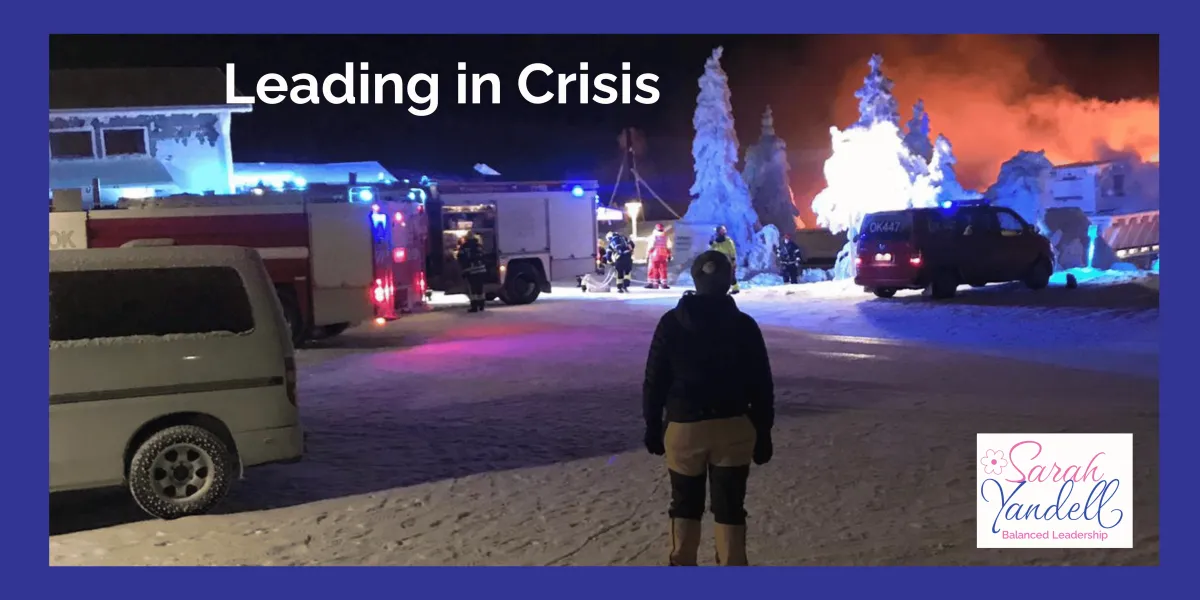
More recently, I was managing a team for a Nordic specialist tour operator; and part of that role was being responsible for organising and hosting a number of group trips to Lapland in the run up to Christmas. These were high end holidays which cost a lot of money; staying in Lapland, meeting Father Christmas, snowmobiling, husky riding and other festive activities. On the second trip I hosted, all started well; everyone loved the place we were staying in but in the middle of the first night, the fire alarms sounded and we were all evacuated.
Bearing in mind the temperatures were -20, I suddenly had to manage a very stressful situation; working with the lodge owners and my own team to ensure that all of the families were transferred to alternative accommodation and that we could continue the holiday as best we could (which was challenging given the damage including all the presents intended for the children!) This was not a time for consensus, this was a time for making quick decisions and communicating them clearly to suppliers, customers and my own team.
Balanced Leadership
Balance is so important when leading others and in normal circumstances this is all about understanding people’s motivation and levels of experience. This is “business as usual” leadership when encouraging people to come up with their own ideas, listening and giving them opportunities to take on challenges to develop their growth is the right thing to do. It allows you do develop a positive culture where everyone is aligned to the vision of you business.
Crisis leadership is completely different. It requires clarity and speed and taking responsibility. This means leading in a much more directional way. In this type of situation, uncertainty is more damaging than imperfect decisions. The most important behaviours that I had to demonstrate were:
🔷Staying visibly calm, even when I was under a lot of stress
🔷Taking full accountability for doing everything possible to give the clients the best possible experience (in the circumstances)
🔷Communicating clearly and consistently with the supplier, my team and our clients
🔷Making decisions with incomplete information
And it doesn't all end when the crisis is over. There are often consequences that also have to be managed. For me that was around managing customer expectations and handling compensation fairly as well as supporting the team emotionally after the event. Leadership continues long after the immediate danger has passed.
Crises don’t call for heroic leadership; they call for grounded leadership. Calm, decisive, accountable, and human. While collaboration remains essential, there are moments when leadership means stepping forward, making difficult decisions, and standing behind them long after the situation has passed. If your team knows that you will do that, they will trust you; not just in the crisis, but every day after.
Register to receive my weekly email; The Resilient Founder where I'll be sharing honest reflections, lessons learned, and practical strategies from my own journey: co-founding and scaling an £8 million business… while navigating motherhood, financial challenges and self-doubt.
And if you are ready to take the next step, you will find my FREE Webinar will help you.
