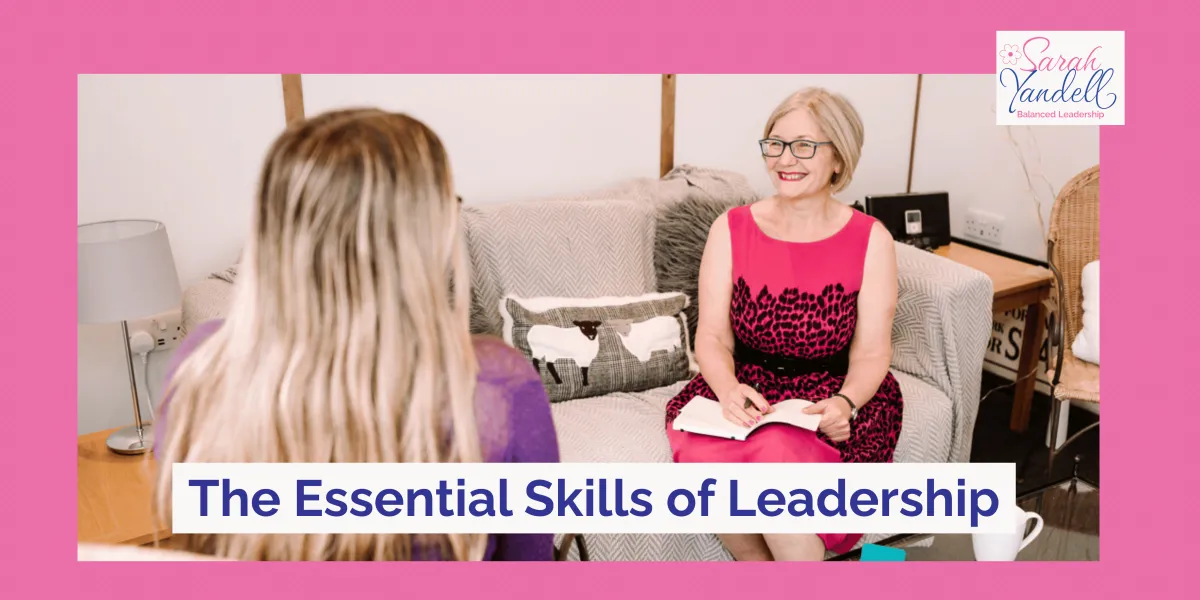
The Essential Skills of Leadership
My Early Experience of Leadership
As a female junior manager working in the hotel industry, I wasn't naturally the loudest person in the room and was repeatedly made to feel small by senior management. I didn't feel the need to have all the answers. I wanted to understand people, listen to different perspectives and build relationships.
I was told I was too soft; I needed to toughen up and that my team needed a firmer hand. So I did what was asked of me, in order to fit in with the culture of the business. I followed my boss’s lead and became more directional and less open to listening to their ideas; which to be honest would have been rejected by senior management in any case. What I didn't realise then was that I didn't necessarily need to become a different kind of leader. I needed to become more confident in the kind of leader I already was.
It was only when I moved from working in hotel sales to work for an Australian owned travel company that I began to realise that maybe I was right and all my previous managers were wrong. My new boss took me on for the experience I had, he wanted to know my ideas and he asked for suggestions on what we should do. It was revolutionary. My role was to negotiate with suppliers all over the world so there was no one right way of communicating - every country and culture was different.
Looking back now, as a female manager, I think that my approach was rejected partly because of being a woman who was too soft. Yet what was considered soft then has now been acknowledged as one of the most important skills in leadership; but they have continued to be called “soft skills”
What are Soft Skills?
These are the skills that in my opinion are essential when leading a team as well as in developing relationships with customers and suppliers. They include active listening, empathy, communication, collaboration, emotional intelligence, and relationship building.
Even the name suggests that these are somehow the easier, less important parts of leadership. But try leading a team through conflict, having a difficult conversation with someone you value, gaining the trust of people who don't yet know you, or understanding what is really going on beneath the surface of a problem. There is nothing soft about any of that.
There is a growing body of research challenging the idea that interpersonal skills are somehow secondary to the "hard" parts of leadership. In fact research into female leadership has found links between emotional intelligence and transformational leadership, with women tending to score higher in some measures of ability-based emotional intelligence.
More recent research into women in senior leadership has highlighted the importance of social intelligence; particularly in nurturing relationships, navigating complexity, building trust and developing reputation. And research into empathetic leadership is increasingly connecting empathy not simply with employee wellbeing, but with relationships, leadership effectiveness and performance.
None of this means that women are simply "better leaders". Nor do I think we should replace one stereotype with another by saying women are naturally better at empathy and men are naturally better at strategy. That isn't the point. The point is that qualities historically associated with women have often been undervalued because we have labelled them soft and perhaps the label is the problem.
Why is this Important to Women?
As I experienced myself as a woman leader, we're often expected to demonstrate warmth, empathy and collaboration because those qualities are associated with femininity; but we're also expected to demonstrate confidence, authority, decisiveness and strength because those qualities are associated with leadership. Get the balance wrong and you can be criticised either way.
And I wonder how many women have spent the early part of their careers trying to work out which version of themselves they needed to become to be taken seriously. I know I did and wish I had understood this earlier. Looking back now, I can see that some of the qualities I questioned in myself were actually among my greatest strengths.
And I have always believed that you get better results when people feel trusted, valued and involved. None of that means avoiding difficult decisions; it doesn't mean letting people off when they aren't performing; it doesn't mean being everyone's friend and it certainly doesn't mean being afraid of conflict. You can be kind and be strong. Perhaps we need a different definition of strength
One of the things I love about leadership as I've experienced it is that strength doesn't always look like certainty. Sometimes strength is being prepared to say: "I don't know. What do you think?" Sometimes it is listening when you would rather defend yourself. Sometimes it is admitting you got something wrong. Sometimes it is having the uncomfortable conversation you've been avoiding. And sometimes it is simply creating enough trust that people feel safe telling you the truth.
These things can be incredibly difficult so why do we call them soft?
The World of Leadership is Changing
This conversation is becoming even more relevant as the workplace changes. The more technology and AI take over tasks that can be automated, the more valuable distinctly human capabilities become. The World Economic Forum's Future of Jobs Report 2025 identified leadership and social influence as a core workforce skill, alongside empathy and active listening. So perhaps the future of leadership is about becoming more human while becoming more effective.
If I could go back and speak to the younger version of me who was wondering whether she was doing leadership "properly", I think I would say this: ”Don't confuse being different with being wrong”. You don't need to become the loudest person in the room; you don't need to pretend to know everything; you don't need to suppress your empathy to demonstrate authority and you don't need to choose between being kind and being strong.
But you do need to develop the full leadership toolkit which means making difficult decisions, setting boundaries, holding people accountable and having uncomfortable conversations. And then bring your own strengths into that because the answer isn't to become less empathetic, less collaborative or less human; it's to become confident enough to recognise those qualities as strengths and skilled enough to use them well. I don't think we need a better word for soft skills. I think we need to stop calling them soft. They are leadership skills.
Perhaps one of the most important lessons for women coming through leadership today is that you don't have to abandon the qualities that make you who you are in order to become a strong leader. You can be commercially ambitious and deeply human. I don't think we were doing leadership wrong. Perhaps we were simply using a definition of leadership that was too narrow.*
About the Author
Sarah is a business founder, MBA graduate and coach who has built and scaled businesses to over £8 million in revenue with teams of up to 25.. She now helps ambitious founders gain clarity, build motivated teams and create businesses that support the life they want to lead.
Register to receive her weekly email; The Thoughtful Founder where she'll be sharing honest reflections, lessons learned, and practical strategies from her own journey: co-founding and scaling an £8 million business… while navigating motherhood, financial challenges and self-doubt.
And if you are ready to take the next step, you will find her FREE Webinar will help you
☑️Recruit the right people first time so they fit with your core business values.
☑️Motivate your team and communicate effectively so they consistently deliver beyond expectations
☑️Step back from the day job and replace yourself with your team.
