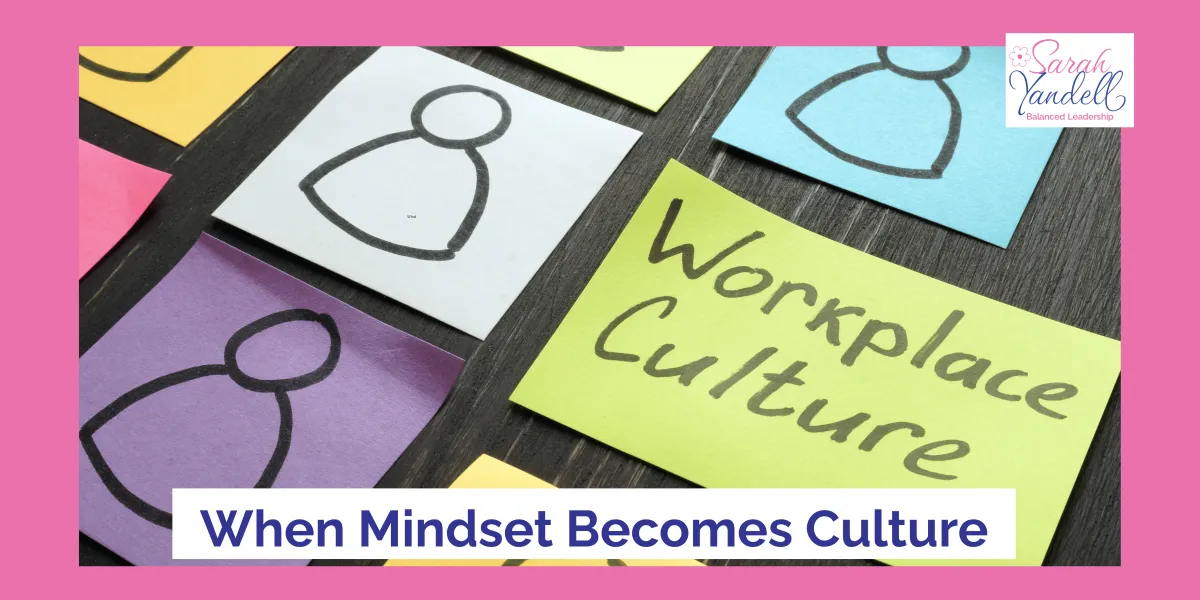
When Mindset Becomes Culture
When Mindset Becomes Culture
As a founder, it is easy to think about mindset as something personal.
☑️How do I stay positive when things aren't going to plan?
☑️How do I remain resilient when I'm carrying so much responsibility?
☑️How do I keep believing in the business when there are setbacks?
But mindset isn't just a personal leadership tool; your mindset influences the mindset of your team and over time, the way you think, respond and communicate can become the culture of the business.
What Happens When Things go Wrong?
In every business there will be mistakes, missed targets, difficult conversations and decisions that don't work out as expected. The interesting question isn't whether these things happen; it's
❌Do people immediately start looking for someone to blame?
❌Do they become reluctant to speak up?
❌Do mistakes get hidden until they become bigger problems?
👍Or can someone say, "That didn't work. What can we learn from it?"
I have worked both in businesses that had a culture of blame as well as those where the culture was one of learning, experimenting and continual improvement. That difference reflected in a more successful business, much lower turnover and highly motivated staff.
When I founded my first business; the importance of culture was forefront in my mind; especially when we started to recruit, build and develop our team. Of course there were mistakes but these all helped to define where we needed to improve and build from.
The Importance of Feedback
I recently read a Harvard Business Review article about ensuring feedback leads to learning. One of the points that particularly resonated with me was the idea that feedback only creates improvement when people can manage the emotions it creates.
That feels particularly relevant in a founder-led business because when a founder reacts to a problem with frustration, blame or fear, the team can quickly learn that mistakes aren't safe to expose. And when people believe that being wrong is dangerous, they become much more focused on protecting themselves than improving the business.
The Founder Sets the Emotional Tone
Founders don't have to consciously set the culture for it to happen. Your team is watching how you respond. When something goes wrong, do you ask:
"Who made this mistake?" or: "What happened, and what can we learn from it?"
☑️When someone challenges your thinking, do you hear it as resistance or do you see it as an opportunity to test your assumptions?
☑️When a team member makes a mistake, do you focus on what they did wrong or do you help them understand what they could do differently next time?
These responses may seem small, but they send powerful messages about what is valued in the business.
But mindset needs to be shared. It isn't enough for the founder to have a growth mindset if the rest of the team hasn't bought into the same way of working. Alignment isn't just about agreeing on the business goals. It's about agreeing on how you are going to work towards them.
If the founder is thinking: "We need to experiment, learn quickly and adapt." while the team is thinking: "Don't make a mistake because I'll get blamed." you don't have alignment; you have two very different operating systems. And eventually, that disconnect will show up in performance.
A team that shares the right mindset is more likely to:
☑️Raise problems early rather than hide them
☑️Challenge ideas constructively
☑️Take responsibility rather than look for someone to blame
☑️Learn from mistakes rather than repeat them
☑️Ask for help when they need it
☑️Stay focused on the bigger goal when things become difficult
That doesn't mean creating a culture where everything is acceptable. Quite the opposite. A learning mindset still requires high standards and accountability. The difference is that accountability asks, "What happened and what are we going to do about it?" Blame asks, "Whose fault is this?"
What Mindset are you Creating?
One of the most useful questions a founder can ask isn't simply:
"What do I want my team to achieve?" it's: "What do I want my team to believe?"
Do I want them to believe
☑️ That it's safe to challenge me?
☑️That mistakes can be discussed openly?
☑️That asking for help is a strength rather than a weakness?
☑️That feedback is intended to help them improve rather than diminish them?
☑️That everyone is responsible for contributing to the same bigger goal?
Because those beliefs influence behaviour and behaviour becomes culture.
A Simple Founder Check-in
The next time something doesn't go according to plan, pause before reacting.
Ask yourself:
1. What is my instinctive response?
Am I moving towards curiosity or blame?
2. What do I want the team to learn from this?
Not just about the task, but about how we work together.
3. What behaviour am I modelling?
Would I be comfortable with my team responding to mistakes in the same way that I am?
4. Are we still aligned on the goal?
Sometimes disagreement about the route gets mistaken for disagreement about the destination.
5. What would make it easier for people to speak up next time?
That final question can be particularly powerful because a team that tells you about a problem while it is still small is far more valuable than a team that waits until it becomes impossible to hide.
Building a business isn't just about getting people to work towards the same goal; it's about creating the shared mindset that enables them to get there. As founders, we have enormous influence over that mindset.
The way we respond to pressure, mistakes, feedback and challenge teaches our teams what is safe, what is valued and what is expected. So perhaps the question isn't: "Does my team have the right mindset?" Perhaps it is: "What mindset am I creating for my team?"
Because whether we realise it or not, our mindset can become their culture.
About the Author
Sarah is a business founder, MBA graduate and coach who has built and scaled businesses to over £8 million in revenue with teams of up to 25.. She now helps ambitious founders gain clarity, build motivated teams and create businesses that support the life they want to lead.
Register to receive her weekly email; The Thoughtful Founder where she'll be sharing honest reflections, lessons learned, and practical strategies from her own journey: co-founding and scaling an £8 million business… while navigating motherhood, financial challenges and self-doubt.
And if you are ready to take the next step, you will find her FREE Webinar will help you
☑️Recruit the right people first time so they fit with your core business values.
☑️Motivate your team and communicate effectively so they consistently deliver beyond expectations
☑️Step back from the day job and replace yourself with your team.
